Panama hosts two of the most recognized trade areas in the region: Panama Pacifico and the Colon Free Trade Zone. Both work as platforms for companies that participate in the international market, although each one supports different business models.
The first is a special economic zone created to attract logistics, manufacturing, and service companies, with its own rules for permits, customs procedures, and taxation. The Colon Free Trade Zone, known in Spanish as the Zona Libre de Colón (ZLC), has more than 70 years of experience in global trade and plays an important role in regional redistribution and re-export activity.
If your business depends on importing, storage, and the rapid movement of goods, this free zone comparison will help you clearly identify which system aligns better with your operational model.

To better understand the differences between these regimes, it helps to first clarify what a free trade zone is. In simple terms, it is a designated area where companies can carry out activities such as entry, storage, transformation, or re-export of goods under special customs and tax rules designed to support trade and employment.
In this article, you will gain a clearer understanding of how these two important trade zones are structured and the advantages each one offers.
What Is Panama Pacifico?
Panama Pacifico is an economic area created to attract companies and facilitate their establishment through a legal regime that covers tax, customs, migration, labor, and business matters. The Panama Pacifico Agency (APP), an autonomous entity of the national government, administers and promotes this special economic zone.
In practice, Panama Pacifico bases its regime on Law 41 of 2004, which applies to companies established within the area. Under this system, businesses must complete a registration process and carry out activities authorized by law.
Special Economic Zone Advantages
One aspect widely valued in Panama Pacifico is its proximity to the Panama Canal, which connects ports, the international airport, and major land routes with competitive transit times.
The regime of this special economic zone provides tax exemptions and customs incentives established under regulations issued by Panama’s Ministry of Economy and Finance.
Companies planning foreign investment projects focused on corporate services often consider this special economic zone because the legal structure reduces administrative steps. The Ministry of Commerce and Industries describes Panama Pacifico as a strategic location for multinational headquarters and corporate service operations.
Real estate is another important component of this territory. Panama Pacifico is not only a business district; it also contains residential areas and services such as apartments and supporting infrastructure. This setting allows some companies to concentrate their operations and physical presence in one location, which can reduce daily travel and improve staff logistics.
What Is the Colon Free Trade Zone?
The Colon Free Trade Zone is a designated territory where the government facilitates inventory management and regional redistribution. For this reason, many companies use it as a base for wholesale purchasing and re-export to different markets.
The Colon free trade zone is administered by the Colon Free Zone Authority (AZLC). Its legal regime is based on Decree Law 18 of 1948, which remains in force today. An attempt to reform the regime through Law 72 of 2012 was later repealed by Law 73 of the same year, restoring the validity of the original decree. This legislation regulates the operation of the zone, as well as the obligations and incentives that apply to companies established within it.
CFZ Advantages
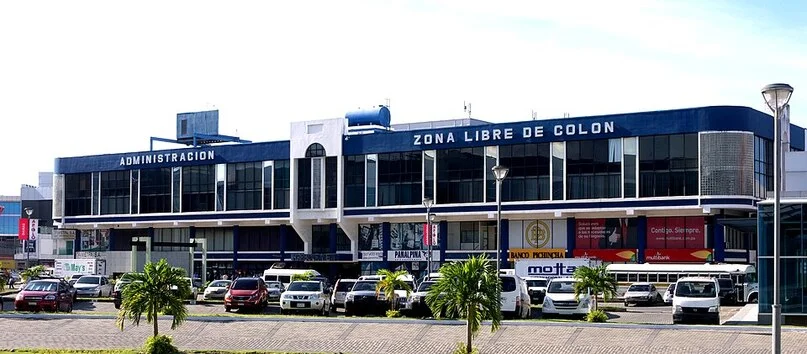
One of the main advantages of the CFZ is its focus on volume and product turnover. According to official data published by the zone’s administration, total commercial activity reached B/. 24,956.5 million in 2024, a number that helps illustrate the scale of trade handled in the area.
The Colon Free Zone brings together companies involved in importing, re-export, and related services within the same business environment. Companies that depend on fast product movement and regional redistribution often benefit from this commercial ecosystem.
From a cost perspective, many companies are attracted by the tax exemptions associated with operations carried out within the Colon Free Trade Zone, as well as the customs procedures available in the area. Even so, companies must review which activities qualify and what registration and reporting requirements apply under CFZ regulations.
Free Zone Comparison
This free zone comparison becomes easier to understand when you separate three questions: what does your company do, where do you sell, and what goods need to move through customs?
The following outline helps explain the main differences between Panama Pacifico and the Colon Free Trade Zone.
- Operational Profile: Panama Pacifico suits companies that combine logistics with services and, in some cases, light production. The Colon Free Trade Zone, by contrast, focuses on large-scale trade, distribution, and re-export activity.
- Customs Interaction: If the core of your business is importing large shipments and redistributing them, the Colon Free Trade Zone in Panama often provides the most suitable environment because it supports constant cargo movement. If your operation requires internal processes such as assembly, repair, or logistics services that add value to goods, Panama Pacifico may fit better. Its legal regime contains specific customs and tax provisions for these types of activities.
-
Talent and Administrative Procedures: In this free zone comparison, it is important to recognize that both regimes rely on a central authority to manage procedures.
In Panama Pacifico, the Panama Pacifico Agency administers and regulates the area. In the Colon Free Trade Zone, the Colon Free Zone Authority (AZLC) supervises the regime and requires companies to comply with registration rules, operational reports, and the Electronic Commercial Movement Declaration (DMCE). -
Commercial Risk and Regional Environment: In 2025, news reports indicated that the agency presented plans to attract new industries and strengthen its proposal for companies located in Panama Pacifico. This development positions the area as one of the strongest options in this free zone comparison.
The Colon Free Trade Zone, on the other hand, may experience greater variation depending on trade cycles and unusual commercial activity. At the same time, the area faces competitive pressure related to infrastructure upgrades, digital systems, and the growth of electronic commerce.
We Can Help You Form a Company in a Panama Free Zone
Choosing between Panama Pacifico and the Colon Free Trade Zone requires translating legal rules and incentives into your actual business operation, such as your line of business, cost structure, compliance requirements, and long-term plans.
If you need assistance, we can review your case and prepare the documentation required for registration and operational setup under the appropriate regime before the relevant authorities.
For projects involving foreign investment, we coordinate a legal review based on the regulations that apply in each free trade zone. Our team provides guidance throughout the process and assists with communication with the competent authorities. Contact us today.