The enrollment determines which country’s laws govern a vessel, who holds legal title, and what authority is responsible for enforcing safety and labor standards aboard. Knowing why is ship registration important means understanding how the entire system that moves goods across oceans stays organized and accountable.
More than 112,000 commercial vessels currently operate in international waters, and each one must be registered under a national flag before it can trade, enter a port, or obtain insurance. Over 150 flag states maintain their own records, but a handful of open registries account for the overwhelming share of flagged tonnage worldwide.
What Is Ship Registration?
Before understanding why ship registration is important, it helps to know what the process involves. Vessel enrollment, also known as flagging, is the formal process through which a maritime administration records a vessel in its national ship registry database and issues an official certificate confirming that entry. That document assigns a unique number, confirms nationality, identifies the listed owner, and records tonnage, IMO identification code, and port of registry. The flag state then enforces applicable international conventions aboard that vessel.
The types of ship registration reflect different policy objectives, from protecting national industries to attracting foreign tonnage:
- National (Closed) Registration: Under maritime law, this model requires ownership or incorporation in the flag state.
- Open Registration (Flag of Convenience): This type of ship registry is important because it gives owners access to lower fees, unrestricted crew nationality, and favorable tax treatment.
- Offshore or International Ship Registers: Created by traditional maritime nations to combine competitive fiscal conditions with regulatory standards.
- Bareboat Charter and Dual Flagging: One practical example of why ship registration is important for operators: a vessel temporarily flies a second flag under a bareboat charter without canceling the underlying record, preserving rights under both jurisdictions simultaneously.
Why Ship Registration Is Essential
1. For Legal Protection
- The registration of ships in maritime law gives each vessel a nationality and a defined legal home. Under UNCLOS Article 91, vessels carry the flag of one state only, and that state holds jurisdiction over them on the high seas. A vessel without valid documentation has no diplomatic protection and no standing before port authorities or courts.
- To ensure accountability, the IMO assigns each registered vessel a permanent seven-digit identifier that remains unchanged regardless of name changes, flag transfers, or ownership history, which underscores why ship registration is important for legal protection.
- The ship registry database also records title and encumbrances. That entry creates presumptive evidence of ownership and allows lenders to record mortgages against the vessel. Without a recorded mortgage, a creditor’s interest holds no priority over competing claims. Some jurisdictions include a dedicated mortgage system that protects local and foreign lenders under a well-established legal framework.
2. For Tax and Financial Efficiency
- Income from vessels in international trade can be exempt from local income tax. This is part of why ship registration is important for tax planning: many open schemes apply a tonnage tax regime in which companies pay a fixed rate based on fleet size rather than actual earnings, reducing financial planning uncertainty for multi-vessel operators.
- Why is ship registration important for financing? Banks require valid enrollment before extending credit or coverage. A vessel with a verified number on file and a clean port state control inspection record commands better financing terms than one with documentary deficiencies. Surveys conducted for the international ship register produce the certificates lenders and underwriters rely on throughout the loan or policy period.


3. For Commercial Operations and Global Mobility
- The principle of freedom of the high seas allows vessels of any nationality to transit international waters without restriction. Ports worldwide demand a valid Certificate of Registry before granting clearance, and customs officers verify it at each call. This is why ship registration is important for commercial access: a vessel without a current flag authorization cannot enter or leave port legally.
- Different port state control bodies publish annual rankings by flag state. Another reason why is ship registration important commercially: a vessel in good standing with the merchant marine administration of its flag state faces fewer targeted inspections. Charterers and cargo owners factor flag performance into risk assessments, which makes flag choice a commercial decision as much as an administrative one.
- Vessel acquisitions and charter agreements depend on the vessel’s file. Buyers’ counsel queries the flag state’s official records to confirm title, check for undisclosed mortgages, and verify that the vessel’s official number matches the physical unit. Why ship registration is important for commercial transactions becomes clear here: most open administrations provide online access to this information, reducing due diligence time in time-sensitive deals.
4. For Safety Compliance and Inspections
- During a port state control inspection, port authorities verify that foreign vessels comply with international maritime conventions. Inspectors board, review all statutory certificates, interview the crew, and assess the vessel’s condition. The Certificate of Registry is the first document they check. If it is expired or inconsistent with the ship registry database record, the inspection result deteriorates immediately.
- A vessel detained after a port state control inspection loses operating time and commercial income. Repeat detentions accumulate permanently in regional MOU databases. Fraudulent registration, where a vessel claims a flag without authorization from the relevant maritime administration, draws immediate detention and may trigger criminal referrals. Owners with a verifiable ship registration number under a recognized flag face none of that exposure.
Why Panama Is the Best Option for Ship Registration
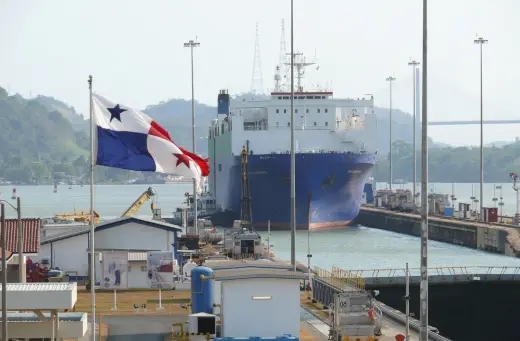
Panama holds one of the three largest open registries in the world, with 8,638 flagged vessels totaling 233.2 million gross registered tons. To efficiently manage a fleet of this scale, the AMP (Autoridad Marítima de Panamá) issues a provisional patent that allows a vessel to trade while the documentation file completes, demonstrating why ship registration is important for maintaining continuous maritime commerce without administrative delays.
Once the AMP accepts the file, it replaces the provisional with a permanent authorization subject to continued compliance. Vessels with valid IACS classification certificates do not require re-survey when transferring to the Panamanian flag. The country has competitive vessel registration costs, and also allows dual registration: a foreign vessel on bareboat charter can operate under that flag for two years, renewable. Additionally, its fiscal system is territorial, which exempts income generated abroad from taxation.
Get Your Ship Registration Number in Panama
Now that you know why ship registration is important, getting professional guidance from the very beginning is essential for your maritime operations. Enrolling your vessel under the globally recognized Panamanian flag allows you to avoid administrative complications. At Kraemer & Kraemer, we provide specialized legal assistance to help you easily navigate international maritime regulations, ensuring your vessel efficiently obtains its official ship registration number in Panamá and complies with all global standards. Contact us today.