The significance of appropriate estate planning for seniors has become more apparent as Panama continues to draw retirees from all over the world. These legal tactics are crucial financial tools for seniors in order to maintain their independence, safeguard their assets, and ensure that personal wishes are respected both during life and after death.
In this regard, retirement financial planning is crucial to preparing people and families for long-term security. This article describes how a favorable legal system and organizations like wills, trusts, and private interest foundations (PIF) support estate planning for seniors. It also looks at how these instruments facilitate effective wealth management in Panama, guaranteeing a simple and controlled asset transfer.
Estate Planning System in Panama
Through a combination of the Civil Code, trust laws, and specific legislation governing private foundations, Panama’s legal system offers seniors a strong foundation for estate planning for seniors. Succession, the legal transfer of assets upon death is primarily regulated by the Civil Code and can occur either through a valid will or by operation of law when no will exists.
In practice, this means that elderly people who do not formally declare their intentions run the risk of having their estates divided according to default laws, which may not reflect their preferences as a family or as individuals. This makes financial planning for retirement even more necessary when setting up a complete estate plan.
The wide latitude people have in how they dispose of their assets is one of the most powerful features of Panamanian law. In contrast to countries with severe forced heirship laws, Panama typically permits people to decide how their estate will be divided as long as a legally binding will is carried out. This flexibility is especially important for seniors in situations involving international heirs, second marriages, and blended families.
A properly drafted will remains the cornerstone of any estate plan. But depending only on a will could subject the estate to probate proceedings, a legal procedure that verifies the will and manages asset distribution. Probate is necessary, but it can be public and time-consuming, which could delay beneficiaries’ access to assets. For this reason, additional financial vehicles intended to simplify succession and lessen legal complexity are frequently included in estate planning for seniors.
Financial Vehicles for Asset Protection
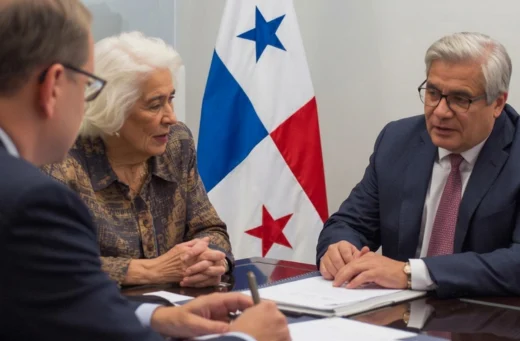
Effective estate planning for seniors relies on financial vehicles such as the PIF and the trust, which help protect assets, ensure privacy, and support efficient wealth management in Panama.
Role of PIF
Among these, the Panama Private Interest Foundation (PIF), established under Law 25 of 1995, stands out as a uniquely effective tool. A foundation is a distinct legal body that manages and retains assets apart from its founder. This division matters because, once assets are moved to the entity, they are no longer a part of the person’s personal estate, improving protection from creditors and lawsuits.
From the perspective of estate planning for seniors, Panama foundations offer a significant advantage: they completely avoid probate. There is no legal transfer upon death because the assets are owned by the foundation rather than the individual. However, assets are still managed in accordance with the founder’s directives as stated in the charter or internal policies of the foundation. This makes it possible to transfer wealth to beneficiaries in a simple, discreet, and effective manner.
Role of Trusts
Another crucial component of asset protection in Panama is trusts. Those structures are governed by contemporary law, establishing a distinct legal patrimony that is administered by a trustee for the benefit of specified beneficiaries. Similar to foundations, trusts allow for precise control over the distribution of assets as well as confidentiality and risk mitigation. This is particularly useful for seniors who wish to provide structured financial support to heirs over time rather than through a single inheritance.
Estate Planning for Seniors Additional Considerations
Estate planning for seniors in Panama also extends beyond the transfer of wealth after death. Seniors must consider the possibility of incapacity and the need for trusted individuals to make decisions on their behalf. Legal instruments such as powers of attorney play a critical role in this context, enabling appointed representatives to manage financial or medical matters if the individual becomes unable to do so.
Another notable advantage of Panama’s system is its territorial tax regime, which generally excludes foreign-sourced income from taxation and does not impose inheritance or estate taxes. This makes patrimonial planning and wealth management in Panama highly efficient for retirees with international assets.

Start Your Wealth Management in Panama Today
In conclusion, Panama provides a solid and adaptable legal system that is particularly well-suited to the requirements of seniors. People can develop strong strategies that safeguard their assets and guarantee a seamless succession process by combining wills, foundations, trusts, and incapacity planning tools. Expert advice is an important part of the process of estate planning for seniors in Panama, though, as the efficacy of any plan depends on appropriate legal structure and professional guidance. Contact us today.