Complying with yachting safety regulations in Panama goes far beyond a pre-departure formality. It means sailing with greater peace of mind, protecting those on board, and reducing setbacks during a recreational outing. In a maritime setting as active as Panama’s, going out to sea with everything in order not only builds confidence, but also shows responsible vessel management.
Below are the main requirements that private yachts must meet in Panamanian waters, among them documentation and the mandatory equipment on board. Beyond penalties, what is at stake is the vessel’s integrity, risk reduction, and the ability to sail with greater protection.
Understanding Panama’s Maritime Safety System
Panama’s maritime safety system seeks to keep navigation under proper conditions of control, prevention, and response to incidents at sea. To do so, it combines document oversight, technical reviews, preventive measures, and monitoring mechanisms that apply to different classes of vessels.
Within this institutional context, the Panama Maritime Authority (AMP), coordinates the regulation and control of the maritime sector. Its duties cover permits, registrations, inspection, and licenses, as well as the collection of statistical data and compliance with the guidelines that apply to inland and maritime navigation.
From an operational standpoint, Panama’s system follows a preventive approach. This means checking equipment, confirming navigation conditions, and promoting responsible practices before departure under yachting safety regulations and other vessel rules.
The system also responds to the different realities of maritime traffic. A commercial vessel is not treated the same way as a yacht used for private recreation. For that reason, the requirements may vary depending on the type, its use, and the area where it operates.
For owners of yachts, these principles mean keeping the vessel in proper condition, paying attention to its physical state, and keeping all required documents up to date with the competent authority.
Non-Commercial Yachting Safety Regulations
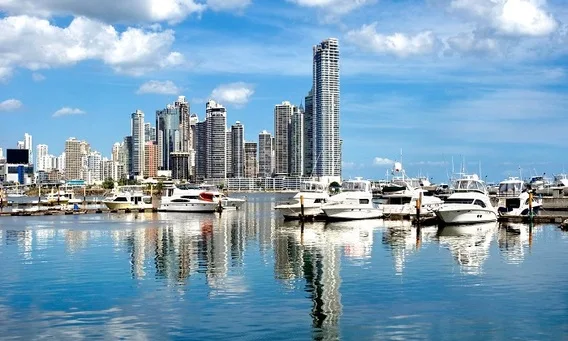
Yachting safety regulations for non-commercial yachts refer to the guidelines governing recreational vessels that do not carry passengers for business purposes or provide public service. Put simply, they cover the obligations that apply when someone sails privately with family members or guests, without turning the yacht into a commercial or charter activity.
These safety requirements for yachts require up-to-date documentation, prior vessel checks, and compliance with the rules issued by the Panamanian maritime authority.
Basic Boat Safety Equipment on Board
Before departure, one of the main points authorities review is boat safety equipment on recreational vessels. In Panama, these items are not seen as a mere administrative requirement, but as a basic condition for maritime safety and compliance with navigation standards.
In different control operations, both the maritime authority and national media have stated that vessels must carry enough life jackets for everyone on board, flares, portable ABC fire extinguishers, navigation lights, and working communication systems. These principles are part of yachting safety regulations, which state that onboard gear must remain complete, visible, and ready for immediate use.
During an inspection, the authority may stop it from leaving if it finds failures in boat safety equipment. The lack of fire extinguishers, the absence of life jackets for all occupants, or problems with the lighting system may be enough grounds to stop the trip. This technical standard aims to reduce risks and prevent a recreational outing from ending in an emergency.
Private Navigation Protocol
The navigation protocol for private trips starts before departure. The person in charge of the vessel, whether the owner or the captain, must check weather conditions, tides, the planned route, and fuel load, as well as the permitted sailing schedule and available contact points. It also requires attention to the marine environment and the protection of sensitive ecosystems. Yachting safety regulations in Panamanian waters become even more relevant when the AMP issues preventive notices or temporary restrictions due to rough seas, heavy rain, or storms.
This navigation protocol also covers the use of authorized docks, carrying valid permits, and respecting sensitive areas. The protection of marine ecosystems should not be overlooked either. For example, in 2024, the AMP reminded commercial and recreational vessels that they must reduce speed to 10 knots in areas where whales are present during the designated season, a measure intended to lower collisions and noise affecting wildlife.
Radio Communication Systems
Onboard communication systems serve a direct purpose: calling for help, coordinating maneuvers, and reporting incidents. Yachting safety regulations do not treat radio equipment as an accessory. The AMP states that a radio license is part of the registration documents.
In various control operations, the authorities have also repeated the importance of keeping VHF radios in working condition, since they are the main means of contact at sea. If the trip stays near the coast and there is signal coverage, cell phones can serve as backup in an emergency.
These communication systems must match the type of route. In other words, a short trip near the coast does not require the same level of preparation as a longer one between islands or in areas with unstable signals. Here again, these safety measures matter as a practical rule, not just as office paperwork.

Owner, Guest, and Crew Safety Measures
The protective measures that apply to recreational navigation in Panama fall under yachting safety regulations and the system regimented by Law 57 of August 6, 2008, the General Merchant Marine Law. This decree states that inland service vessels must hold the applicable boating safety certificates and assigns the Directorate General of Merchant Marine supervisory, inspection, and enforcement duties under the relevant rules.
In practice, maritime safety requires shared responsibilities among owners, guests, and crew members. Each one has a different role before and during the trip, which helps reduce risks and respond to incidents.
In the case of proprietors, they must verify that the yacht keeps its documents in force, carries the permits and certificates required for its class and sailing area, and has the necessary onboard items available and in working order.
Guests, in turn, should receive an explanation of the navigation protocol before departure. That basic briefing should cover the location of life jackets, the basic use of flotation gear, the location of the first aid kit and fire extinguishers, and the available means of contact on board.
As for the crew, its role is fundamental, they must know the vessel well, locate each emergency item accurately, identify evacuation routes, supervise the proper use of lifesaving gear, and be ready to act quickly and with sound judgment in the event of any incident.
Private Boating Safety Certificates and Training
Training carries more weight than many people think. The AMP authorizes training programs and regulates the licensing paths for pleasure craft operators, yacht captains, and other licenses linked to recreational navigation. For that reason, when reviewing regulations, it becomes clear that buying a vessel is not enough. Preparation, experience, and, in some cases, courses approved by the authority are also required.
Boating safety certificates prove competence and documentary compliance. At the same time, they work alongside the technical and security accreditation required by the Directorate General of Merchant Marine according to the type of vessel. If you are planning yacht registration in Panama, it is best to organize licenses, permits, radio documents, and Inspection records from the start, since yachting safety regulations in Panama penalize improvisation.
Professional Support for Yacht Registration and Compliance
If you need support to comply with yachting safety regulations in Panama, it is advisable to work with specialized legal counsel that can help you prepare the required documentation, process the vessel’s registration, and guide the steps to obtain the boating safety certificates required by the AMP.
At Kraemer & Kraemer, we have lawyers focused on Panamanian maritime law who can assist you with legal procedures related to yacht registration and compliance with the rules that apply to your vessel. Our support helps with administrative filings and allows your vessel to operate in line with current safety rules in Panama. Contact us today.