If you are looking for the concession meaning, the short answer is this: it is an authorization granted by the government to use, occupy, or develop an area under public control. In coastal areas, a maritime concession allows projects to be carried out on the shoreline, in the water, or on the seabed. These areas are not part of privately owned land, even when the property is located on the waterfront.
In Panama, this process is required for works such as a dock, a marina, a private port, or certain tourism and commercial facilities.
One of the most common mistakes in coastal projects is assuming that privately owned land extends into the sea. This confusion often comes up when someone believes that owning coastal property automatically gives them the right to build in the maritime zone. That is not the case. For that reason, understanding the concession meaning from the start helps prevent mistakes, unnecessary costs, and poorly planned filings.
What is a maritime concession in simple terms?
To understand the concession meaning, you should know that this document works as the legal authorization that allows certain uses in coastal or water areas under government oversight.
However, a concession does not replace other procedures. Depending on the project, the applicant may need a port permit, technical approvals, and compliance requirements before the relevant authority.
This happens because many projects are built on the seabed, meaning the ground beneath the water where piles, foundations, or structures are installed for docks and other coastal works.
In addition, when the project involves a private port, the rules change. This type of facility is intended for handling cargo, passengers, or vessels for a private owner and remains subject to government regulation.
For that reason, before starting a maritime project, it is important to review what additional permits the authority requires, since the concession is only one part of the process.
In Panama, the Panama Maritime Authority (AMP), is the agency responsible for processing maritime concessions for areas related to ports, marinas, docking facilities, and shoreline or seabed zones. Law 56 of 2008 states that these concessions are granted through a contract, subject to the law and its regulations.
According to the AMP, the process has three main stages: submitting the application, meeting the technical and legal requirements, and obtaining contract approval.
This oversight exists because Panama’s port system carries significant weight in the country’s economy. In its 2024 report, the AMP stated that 89.2% of containers measured in TEUs within specialized ports were linked to transshipment operations. This shows the scale of maritime activity and the need to regulate the use of coastal areas and the seabed through concessions and permits.

Regulated dock uses
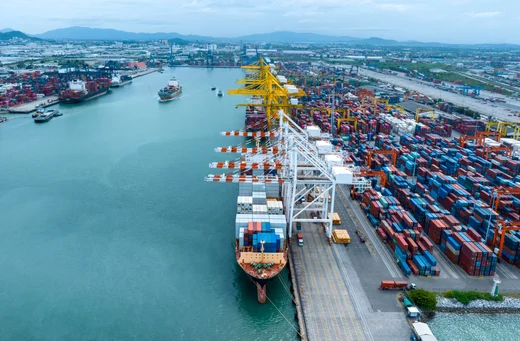
Among the regulated uses are berthing, loading and unloading passengers or goods, vessel services, cargo handling, and certain activities related to marinas, nautical tourism, or logistics.
For example, if the project involves a docking facility, a platform over the water, or a fixed structure, it is not enough to understand the concession meaning. You also need to determine whether the work will occupy the shoreline, the water surface, or the seabed.
The reason is that these projects involve two separate rights: rights over the land and rights over the maritime area. As a result, privately owned land on the waterfront does not automatically include the seabed or areas under public administration. When the project occupies that area, the authority may require a seabed concession, along with other sector-specific permits.
Maritime concessions vs. port permits
It is also important to distinguish between a concession from a port permit. The first authorizes the contractual use of a maritime or shoreline area, while a port permit authorizes activities or services within the port sector.
The AMP states that the General Directorate of Ports and Auxiliary Maritime Industries issues operating licenses to individuals or companies that provide those types of services, which adds context to the concession meaning in port operations.
To better understand the difference, it helps to look at separate situations. If a person wants to build a residential dock for private use in front of their property, they will usually need a maritime concession because the work is located on the seabed or in a public area under government control.
By contrast, if the project involves developing a marina, a private port, or a facility intended to operate vessels and provide services to third parties, a maritime concession may not be enough on its own. In those cases, beyond the use of the area, a port permit may also be required to authorize the activity and the start of operations at the facility.
Compliance obligations
Understanding the full concession meaning also requires addressing compliance. The AMP notes that port facilities operating under concession in Panama must meet the security requirements set out in the ISPS Code and Law 56 of 2008. In practice, this means inspections, security plans, oversight measures, and duties before the maritime management authority.
This also involves contractual obligations, payments, plans, studies, and, when applicable, the renewal or amendment of the contract.
Does owning coastal property give you the right to build on the shoreline?
No. Owning land by the sea does not, by itself, give you the right to build structures on the shoreline, in the water, or on the seabed. This mistake often appears in questions about coastal construction. The reason is simple: privately owned land covers the registered lot, but the maritime area and certain adjoining areas remain under government control and sector-specific management.
For that reason, before starting any construction or applying for a dock permit, you should verify whether the design will occupy areas subject to concession.
In Panama, understanding the concession meaning from the outset helps organize the project and identify whether you may later need a contract, license, technical approval, or a renewal process.
Projects that require a maritime concession
Knowing when a concession is required is also part of understanding its meaning. In Panama, this covers works such as docks, marinas, boat ramps, authorized fill activities, docking facilities, tourism installations by the sea, structures for a private port, and certain commercial or logistics facilities connected to the shoreline.
Residential docks and private ports
A residential dock often requires legal and technical review when it is planned over water or affects the seabed. The same applies to dock construction for private-use vessels. In that situation, adjacent property does not replace government authorization.
If the design occupies a public maritime area, the key question goes beyond the concession meaning, but it is also what that authorization will cover and which permits must accompany the filing.
Marine, tourism, and commercial projects
Marinas, yacht clubs, hotel docking facilities, tourism terminals, and service facilities often require a concession. In some cases, the owner develops a private port to serve its own vessels or those of third parties, under the conditions set by the Panama Maritime Authority.
The AMP itself publishes information on its website about the maritime concession, the requirements, the timeframes, and the map of concessioned areas in the country. Reviewing that official source helps clarify how the concession works in Panama.
Private port infrastructure
Private port infrastructure may include docks, fenders, ramps, authorized fill, yards, and support areas. Each of those uses should be reviewed carefully.
A port permit does not replace the concession, and in some cases another authorization may be required, depending on the service to be provided. For that reason, when a company plans coastal works, it should review the concession meaning before moving equipment, hiring contractors, or submitting execution schedules.
Legal guidance on maritime concessions for a residential dock in Panama
If you are planning a dock, a marina, or any work along the coast, shoreline, or seabed, it is best to review the case before starting filings or construction. The legal team at Kraemer & Kraemer can help you understand the concession meaning clearly, while also reviewing titles, plans, the scope of the project, the possible need for a port permit, and the viability of a seabed concession.
This legal guidance helps organize documents, reduce objections, and submit the application with a clear legal basis before the relevant authority. Contact us today.