If you have decided to choose where to set up a company outside your country in 2026, you may face greater challenges. It is no longer just a matter of paperwork: you also need to make a decision that will not complicate your business from the very first month. That is why the comparison of offshore jurisdictions is an important assessment for anyone involved in international trade.
Currently, the real value lies in protecting assets and properly evaluating the tax advantages available. In this article, you will learn about the territories that stand out this year and how to choose the most suitable jurisdiction for your type of business.


The Role of Offshore Jurisdictions
To begin with, in order to make a comparison of offshore jurisdictions, it is necessary to know the particularities of these territories and the role they play within an international structure. Understanding their function permits us to evaluate with more criteria which legal system is most appropriate according to the nature of the business and the way in which it plans to operate from the outset.
In general, offshore jurisdictions are fiscally neutral platforms, which means that they do not add an extra tributary burden. They also play an important role in asset protection, as they allow resources to be separated from risks through international legal structures.
In terms of tax benefits, they facilitate collections and participations by not generating additional fiscal obligations. In terms of costs and ease of incorporation, they offer agile procedures and simple requirements, which favors orderly implementation from the beginning.
Best for Asset Protection
To continue, a good comparison of offshore jurisdictions requires understanding what types of structures are used for asset protection. These entities enable offshore company to develop legal planning that reduces the risk of wealth exposure to debts, lawsuits, or future claims.
Based on this logic, it is useful to clarify what is meant when referring to an offshore company. In simple terms, it is a corporation established in a jurisdiction different from the owner’s country of residence, designed to function outside that territory under a low or non-existent fiscal regime.
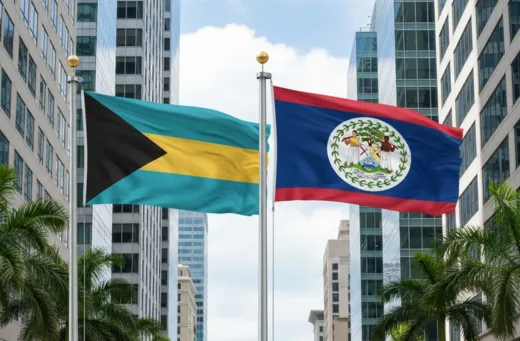
And, in fact, there are two popular destinations for wealth preservation through this type of entity: Belize and Bahamas offshore companies.
Belize Offshore Company
Belize offshore company have become one of the most attractive alternatives for registration, mainly because they offer a well-known legal environment oriented towards international business.
Furthermore, Belize achieved independence from the United Kingdom in 1981 and remained within the Commonwealth, enabling it to retain a legislative basis influenced by English common law, which is attractive to many investors when structuring asset protection schemes. For example, those from the United Kingdom, the United States, and Canada may feel more confident working under a legal tradition with which they are familiar.
In the same way, an Belize offshore company is favored by the legal regulations because it is oriented to conduct activities outside the country. To reinforce capital preservation, this structure can be complemented with a trust, through which a person transfers certain properties to a third party for administration according to a specific purpose. However, there must always be a lawful objective and complete documentation.
Bahamas Offshore Company
A Bahamas offshore company is considered a relevant option when the objective is asset protection, as this jurisdiction offers a predictable legal environment in comparison of offshore jurisdictions. In fact, it maintains a legal system based on common law, which allows for clear corporate rules for contracting and dispute resolution.
Another notable reason for setting up a business in this territory is that it offers a property law structure to prevent fraudulent arrangements. It also guarantees a stable environment for long-term operations, due to the tax advantages derived from neutrality in offshore tax payments.
Likewise, one of the particularities for which a Bahamas offshore company is often created is the possibility it offers to structure multinational corporations with a high level of financial reserve and regulations designed to favor global business, an aspect that is usually considered in a comparison of offshore jurisdictions when evaluating complex international structures.
For instance, this country improved its financial standing with the DARE 2024 (Digital Assets and Registered Exchanges Act, 2024), which was approved by the parliament to modernize the regulatory system for digital capital and included more specific rules on custody, information disclosure, and risk management.
Best for Low Taxes

To continue with the comparison of offshore jurisdictions, it is important to identify those that offer favorable schemes for tax optimization within international structures, either through active companies or through specific vehicles such as holding entities, frequently used in configurations such as a Nevis or Saint Vincent offshore company.
This type of entity can be used to concentrate the participation of many subsidiaries or companies in one international structure to organize the group’s ownership through a single entity.
In this way, the holding company can apply exemptions for participation in dividends and capital gains from the sale of shares. This can help reduce withholding on foreign payments.
Nevis Company
This Caribbean Island has become one of the most highly valued options in a comparison of offshore jurisdictions when analyzing fiscal optimization. In this area, a Nevis company can be incorporated as an international IBC company, allowing it to operate outside the territory under a reduced or almost zero tributary burden, provided that the conditions of the local regime are met.
Within this type of structure, using a Nevis company as a holding company is relevant when looking to have the corporation function as a ownership vehicle, enabling it to possess shares in other enterprises and manage international investments from a single entity. This local tax neutrality favors the efficient organization of international structures.
St Vincent Offshore Company
Another alternative that may be considered a better jurisdiction for an offshore corporation is Saint Vincent and the Grenadines. This region is attractive due to its fiscal efficiency towards international structures. In addition, it benefits from regional integration and alignment with global standards.
It is important to highlight its integration into the CARICOM multilateral double taxation treaty, which facilitates orderly tributary planning within the Caribbean for every in Saint Vincent offshore company and avoids double imposition on transnational activities.
Furthermore, a Saint Vincent offshore company can maintain international tax cooperation, thanks to the guidelines promoted by the OECD that guarantee a transparent fiscal information exchange system.
Best for Cost and ease incorporation
If you are looking for an agile structure with predictable maintenance to set up a company, it is advisable to evaluate the cost and ease of incorporation within a comparison of offshore jurisdictions.
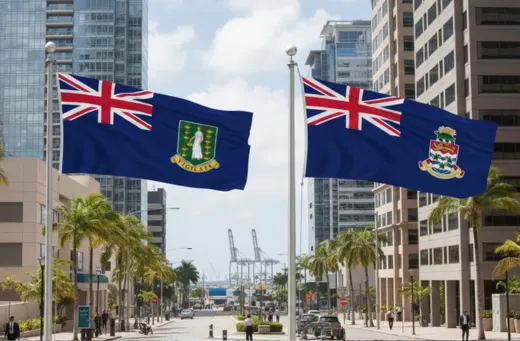
A British Virgin Islands or Cayman Islands company can be an excellent choice when it comes to fast registration processes.
Cayman Islands Company
When comparing offshore jurisdictions, incorporating a Cayman Islands company is recognized as one of the best options. This is mainly because the process is simple and offers various fast-track options, such as registration through an authorized agent, a specialized law firm, or a pre-incorporated company.
In addition, the regulations do not require a minimum share capital. A Cayman Islands company also does not generate direct taxes on profits, capital gains, income, or dividends, which reduces the local tributary burden and promotes management with predictable government fees and fixed costs.
BVI Offshore Business
Also, an British Virgin Islands (BVI) offshore company in the is among the best options when comparing offshore jurisdictions and prioritizing cost and ease of incorporation. This region is governed by a corporate law widely used by foreign owners, which facilitates procedures through registered agents. In addition, registration times are quick and the subsequent management of the corporation is simple.
Another advantage that reinforces the decision to create an in the BVI offshore business is its expected expenses, an aspect that is often considered when comparing offshore jurisdictions. Incorporation fees, agent services, and annual maintenance fees do not generate surprises in running costs.
Although those who decide to register a company in the BVI offshore country must comply with regulations, the country avoids exposing the sensitive data of the ultimate beneficiary in order to comply with privacy laws.
Final Comparison of the offshore jurisdictions
Ultimately, in order to make the right choice after comparing offshore jurisdictions, you must prioritize how well that region suits your requirements and actual operations. For example, if your goal is to protect your assets, Belize and the Bahamas are a perfect fit due to their legal approach and the way they base their property structure. Now, if the purpose is a country with fiscal optimization and good international compatibility, a St. Vincent or Nevis company may be the most convenient alternatives.
When the priority is cost and simple procedures, the Cayman Islands or the IVB stand out for their agile processes and a corporate ecosystem geared toward foreign investors. This type of decision is usually made after a comparison of offshore jurisdictions, where the functional factor is decisive. However, choose a country that facilitates your activities without banking friction, but with clear documentation support from the start.

Lets Form Your Offshore Company
If you have completed your final analysis and decided to create a business, do not take the decision lightly. Whether you are looking at The Bahamas, Nevis, St. Vincent, or a Belize offshore company, it is necessary to carry out a comparison of offshore jurisdictions from a legal and fiscal perspective, as well as to have solid documentation from day one.
Our professional team at Kraemer & Kraemer offers specialized legal advice and has extensive experience to guide you in choosing the most suitable territory for your objectives. If you wish to participate and initiate activities in any of these offshore jurisdictions, you may request a personalized evaluation and receive professional guidance from the outset. Contact us.
FAQs Related to Offshore Jurisdictions
Before concluding this comparison of offshore jurisdictions, it is important to answer some frequently asked questions about this type of business:
A country can be considered appropriate for integration into a comparison of offshore jurisdictions when it offers a real balance between operational benefits and clear financial regulation. It must also comply with anti-money laundering standards, respect privacy laws, and offer a competitive fiscal regime with simple establishment procedures.
Yes, and this is common in international structures, especially when comparing offshore jurisdictions, where banking is evaluated independently of the formation of the company. In this case, the bank will request a complete file with corporate documentation, ownership structure, proof of origin of funds, among other details.
Once you have chosen the country, after a comparison of offshore jurisdictions, the question arises as to how much it costs to establish the company. However, the cost can vary depending on the region and type of entity, and usually includes the official incorporation fee, registered agent and domicile services, as well as annual renewal fees.
Yes, in most cases it is possible. When interested parties compare offshore jurisdictions, some consider relocating their corporation to another country for functional, fiscal, or regulatory reasons, through a process called redomiciliation. This makes it possible to continue running the business without dissolving the organization and while maintaining its legal identity.
This procedure is possible as long as both the country of origin and the destination jurisdiction recognize for this legal concept. For example, a Nevis company can use redomiciliation when the regulatory system of both nations supports it and the applicable requirements are met.