Buying an island in Panama represents an attractive investment opportunity, though it demands regulatory, environmental, registry, and territorial due diligence far more rigorous than purchasing a conventional property. Anyone considering a private island in Panama must pin down, before signing any contract, the legal nature of the land, its ownership, and the limits that could affect its use.
Main Insights
- Law No. 2 of 2006 governs concessions and the transfer of island territory meant for tourism, with conditions on surface area, easements, and investment.
- Every private island for sale requires confirming registered ownership with ANATI and the Public Registry before any commitment.
- Oceanfront land answers to a state-controlled regime: the coastal strip and the 22-meter reference line from the high-tide mark limit what qualifies for construction.
- The viability of the environmental impact and land-use planning define what can be built and under which permits.
The Legal Structure Governing the Purchase of an Island
Law No. 2 of January 7, 2006, stands as a foundational reference for insular land set aside for tourism use. The regulation governs concessions over island areas and coastal zones, along with certain cases of conveying these lands, and sets conditions on surface area, easements, infrastructure, investment, and protection of non-transferable assets.
On top of that, the country sets certain conditions for buying an island for sale in Panama, as covered below:
1. Verify ownership of the private island for sale
When buying an island, the first step involves confirming whether it qualifies as duly registered private property or state land subject to a concession or a transfer procedure. Occupation, possession, or a plain informal document do not amount to full, recorded title. For that reason, the registry history, boundaries, liens, easements, and possible third-party rights all need review.
Every private island for sale also comes with requirements on oceanfront land, public-use areas, and easements. Law 2 sets specific provisions for beach access rights and provides, for certain projects, a 22-meter reference line from the high-tide mark. It likewise establishes restrictions tied to non-transferable assets and ecosystems such as mangroves and coral reefs.
2. Environmental impact viability
The environmental impact review stands as another determining factor when buying a private island in Panama. Executive Decree No. 4 of May 28, 2026, regulates the Environmental Impact Assessment regime set out under Law 41 of 1998. The new structure governs the drafting, submission, evaluation, approval, and follow-up of Environmental Impact Studies, while also incorporating aspects tied to citizen participation and climate change.
As a result, acquiring or buying an island does not automatically mean having free rein to build. Before closing the deal, it must get determined whether the project requires an Environmental Impact Study, what category it would fall under, and what additional environmental permits will prove necessary.
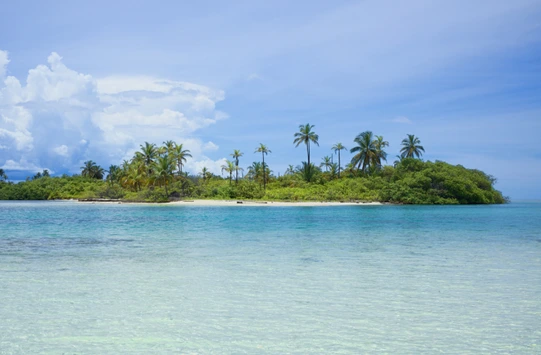
3. Land-use planning for the private island in Panama
Panama has national, regional, and local planning tools, as well as specific schemes for certain territories. For that reason, when buying an island, identifying the instrument that applies to the site and checking land use, density, restrictions, and development conditions becomes necessary. Some island locations carry their own dedicated zoning rules, such as Isla Contadora.
In short, buying an island in Panama involves far more than acquiring a property: it blends real estate, administrative, environmental, and urban planning law. Before committing capital, the title needs review, the standing with ANATI and the Public Registry requires confirmation, the land-use regime and ecological burdens call for verification, and the permits’ viability warrants assessment. A private island in Panama can be legally obtainable and still carry serious limits for the intended development.
Legal Guidance to Buy an Island in Panama
If you are thinking about buying a private island in Panama, you must weigh aspects of real estate, administrative, environmental, and urban planning law within a single deal, and that is where legal support makes the difference. At Kraemer & Kraemer, we review all the requirements needed for the acquisition and assess the viability of whatever permits apply. Contact us today.