Panama Ship registry is the process through which any individual or legal entity, regardless of nationality, enrolls a craft under the largest open maritime system worldwide, through the Panama Maritime Authority. It provides international recognition, facilitates access to strategic trade routes (including the Panama Canal), and offers legal protection and tax incentives to shipowners and investors worldwide.
This guide walks through the documents needed for Panama Ship registry or flagging and the enrollment types, the tax incentives, and the safety standards that keep a vessel compliant.
Panama International Role in Maritime Flagging
The country runs an open ship registration system, meaning a foreign national can enter a boat on the rolls without living in or running a business here. This Panama Ship registry approach has turned the nation into one of the busiest listing jurisdictions worldwide. According to the Panama Maritime Authority, the fleet totals 214.9 million gross tons across 8,174 enrolled vessels.
The industry’s origins date back to the early 20th century, when shipowners moved the first hulls from the U.S. flag to the Panamanian banner during Prohibition in the United States. Since then, the system has grown thanks to factors such as the low cost of Panama ship registry and the absence of income tax for non-resident holders.
The Panama canal, which moves close to 14,000 vessels a year between the Pacific and Atlantic oceans, reinforces the country’s standing in international commercial sailing and explains why so many operators choose Panama Ship registry for their vessels.
The reputation of the Panama flag took a qualitative leap by rejoining the Paris MOU White List in 2026. This achievement rests on a 5.9% detention rate, sitting below the 7% threshold required to belong to this maritime safety standard.
Panama Ship Registration System
The Maritime Authority (AMP) administers Panama ship registration, the state body tasked with regulating every national maritime activity, spanning both commercial and recreational vessels. It offers two main options:
- International Service: For vessels that operate on routes and waters worldwide.
- Local Service: For vessels that sail only within Panamanian waters.
For Panama ship registration to hold validity, the title of ownership must be recorded with the competent body that centralizes rights over the hull under the Panama flag. Skipping that step leaves this process incomplete.
Panama Vessel Registry
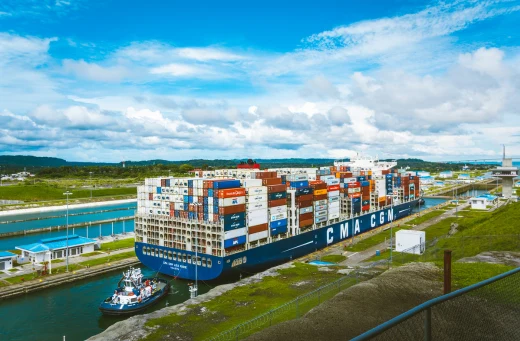
The Panama vessel registry accepts cargo, passenger, and other commercial craft, with no minimum tonnage requirement, under the General Merchant Marine Law. For this, the owner must submit:
- The title of ownership (bill of sale or builder’s certificate).
- The tonnage certificate.
- The technical papers the International Maritime Organization’s global agreements call for.
- Cancellation of the Panama vessel registry under the prior flag, if the craft was listed in another country.
Vessel flagging process fees are calculated based on the craft’s tonnage. Additionally, the owner can reserve the vessel’s name for a fee of US$20.00 while completing the remainder of the vessel flagging process in Panama.
Conditions and Special Cases
Within this Panama vessel registry, oil tankers must submit proof of pollution liability coverage. Any craft over 20 years old needs an extra technical certificate confirming seaworthiness.
This commercial Panama Ship registry even accepts craft still under construction, letting them enroll provisionally with an assigned patent number and call sign before completion. A special provisional listing also exists, valid for three months, for craft headed to scrapping while the owner finalizes permanent de-flagging.
Recreational Ship and Yacht Registration in Panama
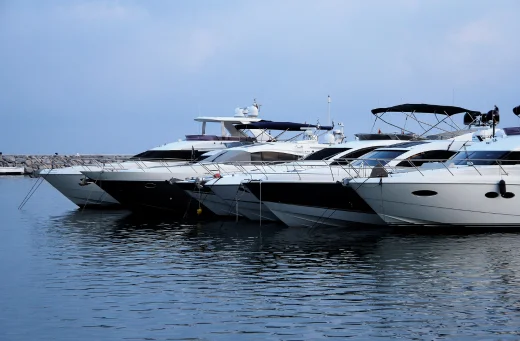
Yacht and boat registration in Panama stands out for its speed compared with commercial vessels, since it wraps up in 2 to 3 business days after submitting the paperwork and does not demand the vessel to sit in the country. Its main features are:
- No technical restrictions: Panama ship registration applies equally to sailboats, launches, or small craft, new or used, with no minimum tonnage or age limit; they only need to meet AMP’s seaworthiness standards.
- Exclusively for pleasure use: Yacht and boat registration in Panama requires no commercial or income proof; a sworn statement confirming recreational or personal use suffices.
- Enrollment process: The Panama ship registration, for recreational crafts, allows a flag change provided the owner supplies cancellation of the earlier listing.
- Legal certainty: Yacht registry formally concludes when the owner records the title, guaranteeing the owner’s legal recognition against third parties and protecting their investment.
Recreational boating safety
Beyond the enrollment paperwork, recreational boating safety regulations need keeping the craft’s technical certificates current, along with holding the matching Radio licence to communicate during an emergency. Neglecting recreational boating safety can jeopardize both the Panama Ship registry’s good standing and the crew’s welfare.
Yacht registry for foreign
A person of any other citizenship can complete a yacht registry without restriction or the need to live here. This Panama ship registration for non-resident owners grants a tax exemption on the craft’s sale, a high level of privacy over the holder’s identity, and the option to rename the vessel without a fresh filing.
Many overseas buyers pick this yacht and boat registration in Panama precisely for that mix of speed, confidentiality, and low cost compared with other maritime jurisdictions.
Panama Flagging Process
The flagging process in Panama unfolds in two stages: an initial provisional enrollment and a later permanent one. A legal representative in Panama or a Panamanian consulate abroad handles this filing. The same procedure applies, with only minor differences, to commercial ship registration for recreational ones.
Provisional Registration
Provisional enrollment carries a six-month term and lets the owner record the craft’s title while meeting the requirements for the final Panama Ship registry. The temporary filing can close out anywhere from 3 business days to 6 hours, depending on vessel type and whether the applicant already has the paperwork ready.
Permanent Registration
Permanent enrollment must be demanded within six months of the provisional permit. Once granted, the permit runs for two to five years depending on the service category and vessel type. Either way, this Panama vessel registry needs renewal ahead of its expiry.
Dual Registry
Dual enrollment, also known as bareboat charter, lets a craft sit enrolled simultaneously under the Panama flag and that of another nation, for up to two years, renewable. This Panama Ship registry option calls for prior consent confirmation from the original listing, and owners typically turn to it when leasing the craft without transferring title.
The Importance of the Radio Licence
The Radio licence stands as a legal requirement for every craft flagged in Panama, since it guarantees communication capability at sea during an emergency. While under provisional enrollment, the AMP grants a temporary Radio licence, valid for three months, which must give way to the final Radio licence once permanent enrollment wraps up.
Advantages of Sailing Under the Panama Flag
Sailing under the Panama flag brings tax, operational, and privacy perks uncommon among other maritime jurisdictions, for both yacht and vessel registration:

- Tax perks: Foreign owners pay no income tax on running their craft; the country applies only territorial charges.
- No tonnage or origin restrictions: Panamanian Maritime law sets no minimum tonnage and draws no line between nationalities.
- Privacy: A high level of confidentiality over the holder’s identity.
- Changes without re-enrollment: The option to rename the craft without a full fresh filing, and to keep dual flagging without losing the Panama flag.
- Specialized infrastructure: Courts dedicated to Maritime law, running every day of the week to settle disputes tied to commercial and recreational Sailing.
These perks, combined with the Panama canal as a maritime corridor between the Pacific and the Atlantic, explain why the Panama flag keeps drawing both large commercial fleet operators and individual yacht holders, over other open inscriptions such as Liberia or the Marshall Islands. The mix of low tariffs, no minimum tonnage, and predictable Maritime law puts the Panamanian pavilion among the world’s favorites.
Fundamental Compliance
Meeting this core standard to maintain a craft’s Panama Ship registry calls for renewing the permanent enrollment and radio licence on schedule, along with holding current the technical certificates the Panama maritime authority demands.
AMP periodically checks the status of active listings, and falling short on these requirements can lead to suspension or cancellation of the matching entry. This same rigor applies equally to individually owned yacht registry filings and commercial fleets, under recreational boating safety rules and Merchant Marine regulations.
Start Your Craft’s Registration in Panama
Whether you are completing a vessel or yacht registry in Panama for private use, picking the right path from the outset avoids delays and penalties down the line. At Kraemer & Kraemer, a Panama law firm experienced in Maritime law, we guide nationals and foreigners through the entire flagging process, from the first filing to the periodic renewal of their vessels. Contact us.